What’s inside?
What we discuss in this simple handbook:
- What is machine learning?
- What kinds of ML do I need to be aware of?
- What simple examples from my everyday life can I use to understand these concepts?
- How does machine learning help fraud teams?
What Is Supervised Machine Learning?
Supervised machine learning (SML) uses labeled datasets to train or “supervise” algorithms in order to classify new data or predict the outcome of similar situations in the future.
It can be divided into classification algorithms that accurately assign data to specific categories and regression algorithms that understand the relationships between dependent and independent variables in given datasets.
What Are Some Everyday Use Cases of SML?
A common example of an SML classification algorithm is the system in your email inbox that classifies spam and moves it into a specific folder.
Have you ever wondered how Google Maps predicts how long your commute will take? It uses an SML regression model that learns from previous trips and considers the specific variables associated with your route to produce an estimated travel time.
How Can SML Benefit My Company’s Fraud Strategy?

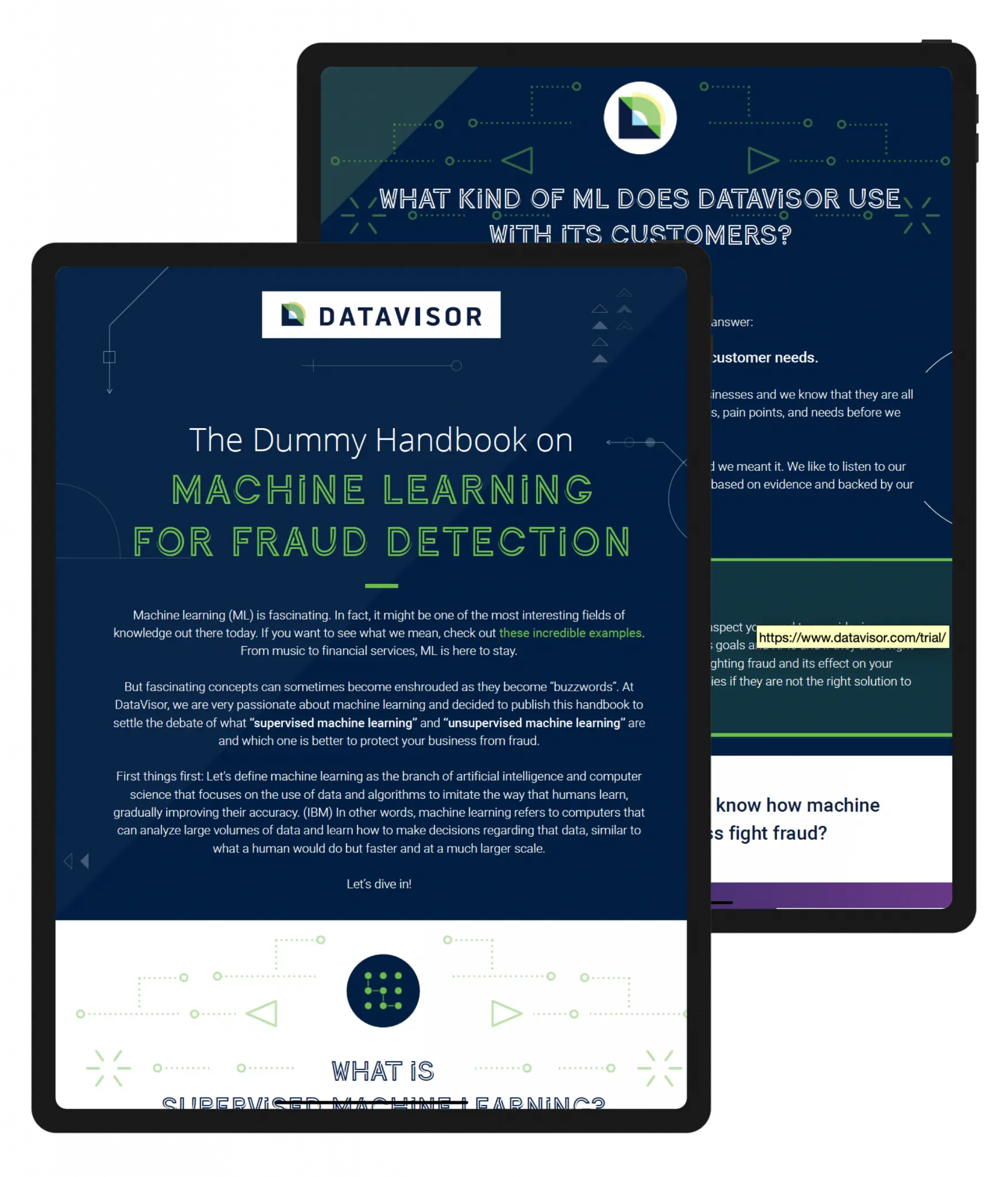
Machine learning is fascinating. In fact, it might be one of the most interesting fields of knowledge out there today and examples of industries that have been transformed by it abound. From music to financial services, machine learning is here to stay.
But fascinating concepts can sometimes become enshrouded as they become “buzzwords”. At DataVisor, we are very passionate about artificial intelligence and machine learning and decided to publish this handbook to explain in simple and clear terms what “supervised machine learning” and “unsupervised machine learning” are and which one is better to protect your business from fraud.
Year-After-Year,
the Industry’s Choice






.png)
.png)