Knowledge Graph: Find the Missing Links in Fraud and Money Laundering

What’s inside?
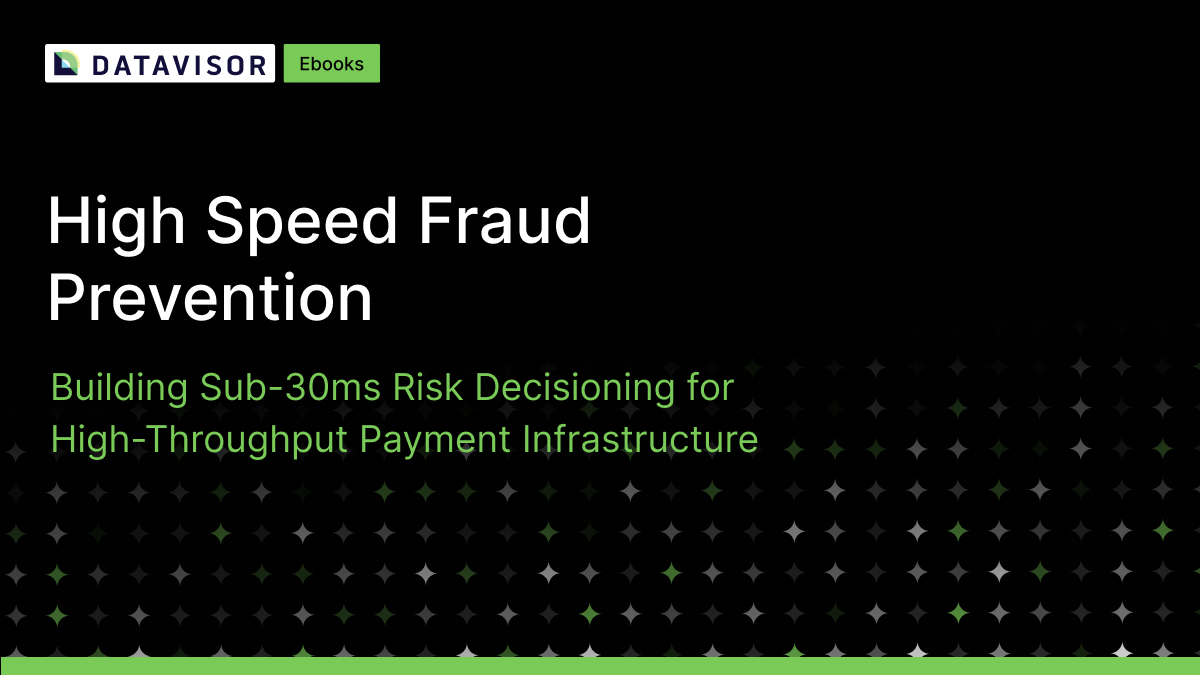
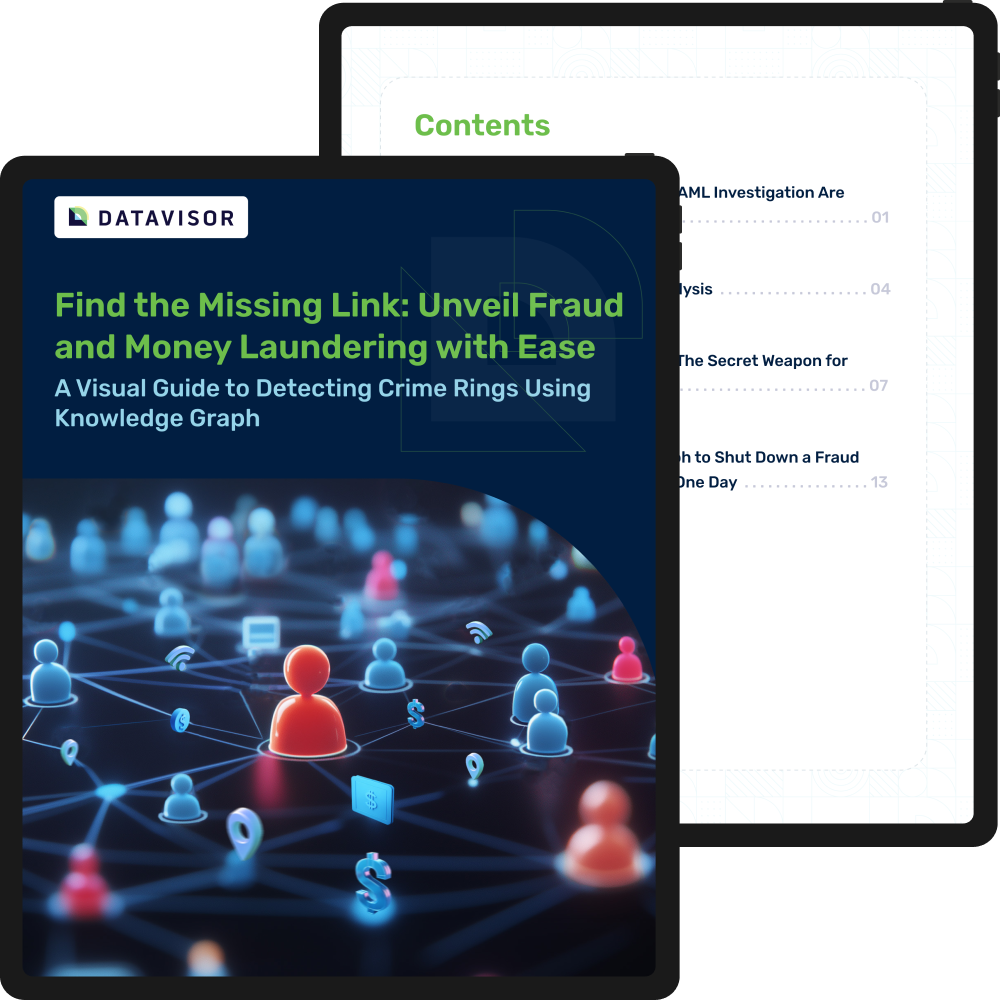
A Visual Guide to Detecting Crime Rings Using Knowledge Graph
Download and learn about:
- Rising Challenges in Fraud and AML Investigation: Understand why traditional methods fall short against increasingly complex fraud and money laundering tactics.
- Link Analysis – First Step Toward Smarter Investigations: See how link analysis helps trace connections and learn about its potential limitations.
- DataVisor Knowledge Graph: The ultimate tool to reveal hidden connections and uncover complex crime rings.
Why the Old Methods of Fraud and AML Investigation Are Failing
Fraud and AML investigation has long been a critical function for financial institutions, ecommerce platforms, and other businesses, serving as a frontline defense against financial crime.
Yet, despite the best efforts of dedicated investigators, traditional approaches to fraud and AML detection and analysis are no longer sufficient. Rising complexity, fragmented data systems, and operational inefficiencies leave many organizations vulnerable.
The Old Way: A Manual and Fragmented Approach
In the traditional investigation model, analysts are tasked with uncovering connections within a sea of data. A typical workflow begins with an alert triggered by a flagged transaction, suspicious login, or anomaly in identity verification. This alert is the first breadcrumb, but following the trail is rarely straightforward.
Fraud and AML investigators must gather information from multiple disconnected systems. At a bank, onboarding data may reside in one database, transaction histories in another, and identity verification results in a third. This often involves exchanging non-secure spreadsheets or waiting for systems to update in batches, introducing delays and inefficiencies.
Each alert requires investigators to log into separate platforms, manually retrieve data, and attempt to reconcile it into a coherent picture. Detecting patterns such as shared devices or shipping addresses is challenging, but uncovering second-level connections through intermediaries, proxies, or complex transaction flows is even more difficult.
For many financial institutions, manual reviews remain the backbone of investigations. Analysts examine flagged cases individually using a combination of intuition and limited rules-based insights. The process is slow and resource-intensive, often creating backlogs of unresolved cases.
The result is an investigation process that is fragmented, frustrating, and limited in scope. Investigators focus on individual alerts, while the larger picture of how those alerts connect to broader fraud or money laundering patterns remains obscured.
The Rising Challenges
Traditional methods of fraud and AML investigation, reliant on manual processes and fragmented systems, struggle to keep pace with the growing complexity of modern financial crimes. As fraudsters adopt increasingly sophisticated tactics, the limitations of static data, slow investigations, and siloed workflows become increasingly relevant.
Advanced link analysis, powered by real-time knowledge graph technology, offers a transformative solution by mapping dynamic relationships, enabling investigators to visualize complex fraud networks, identify multi-hop connections, and take immediate action. This integrated and customizable approach reduces operational inefficiencies, improves detection accuracy, and empowers businesses to stay ahead of evolving threats.
Year-After-Year,
the Industry’s Choice



.png)
.png)