What’s inside?
Learn how to assemble a stellar fraud team who can:
- Apply their skills, knowledge and experience to reduce fraud risk
- Implement and enforce fraud policies for detecting and responding to fraud
- Select the right technologies and tools to support those policies
What Are Synthetic and False Identities?
First things first. If the supply consists of sensitive information, such as Social Security numbers, digital or physical identification, and credit card data, and the demand consists of attackers willing to buy those items, then the products generated from them are false identities.
Fake identities can be either synthetic or traditional:
- Synthetic identities combine authentic and fabricated credentials to create a single identity. They mix personal information that does not entirely belong to one person. For example, a synthetic identity might use a valid Social Security number with a different first and last name.
- Traditional false identities use a single person’s compromised information. For example, a data breach may expose someone’s name, address, date of birth, Social Security number, and employment information. An attacker who obtains this information may be able to impersonate the victim in several ways.
How Much Do Fake Identities Cost on the Dark Web?

eCommerce fraud is set to exceed $20 billion in 2021, up 18% from last year. While advanced fraud detection and prevention technology can help, you need a winning fraud team to choose, deploy and leverage your fraud tools to make the right decisions in critical moments.
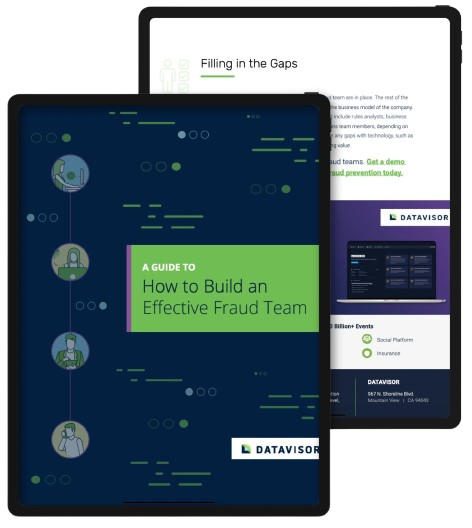
Download our free Guide, How to Build an Effective Fraud Team, featuring DataVisor’s VP of Product, Steve Knopf. With more than two decades of experience leading Product Management and Trust & Safety teams at companies such as eBay, Letgo and OfferUp, Steve knows what it takes to assemble a stellar team for fighting fraud.
Year-After-Year,
the Industry’s Choice






.png)
.png)