What’s inside?
Alert volumes are climbing. Investigations are more complex. Regulatory expectations aren't easing.
AI agents are changing how much of that work has to be done manually.
The problem for most AML teams isn't detection — it's everything that follows. Manual context gathering, inconsistent investigation workflows, hours spent writing SAR narratives from scratch. As volumes grow, teams are forced into tradeoffs between speed, consistency, and coverage that none of them should have to make.
AI agents don't change what AML teams are responsible for. They change how much of that work has to happen manually.
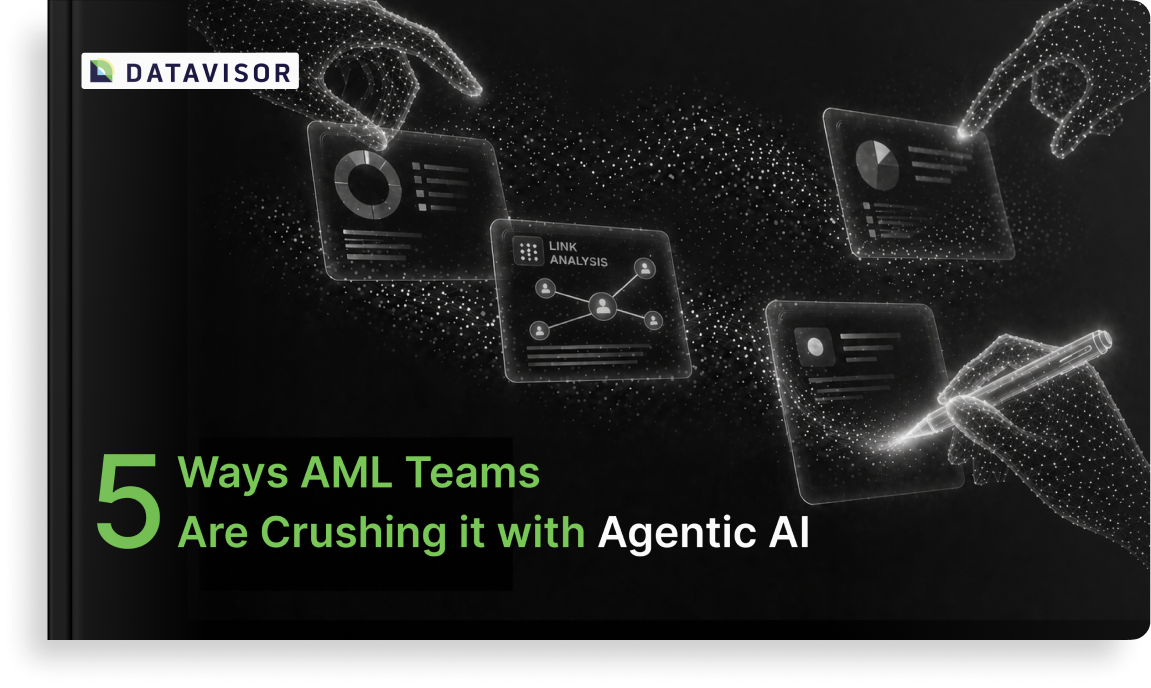
Inside you'll learn how AI agents are helping AML teams:
- Generate production-ready detection rules and feature signals on demand, without engineering involvement
- Test and optimize rules before deployment, with projected impact shown before any change is applied
- Instantly triage alerts with structured summaries that explain triggering logic in plain language
- Guide every investigation with adaptive checklists that make outcomes consistent, auditable, and defensible
- Draft complete, regulator-ready SAR narratives directly from case data — so analysts review and approve rather than write from scratch
AML Teams Aren't Short on Alerts. They're Short on Capacity.
Alert volumes keep climbing. Investigations are more complex. Regulatory expectations aren't easing.
And through all of it, the job stays the same: identify suspicious activity, investigate it thoroughly, and report it accurately. Every step of that process has to be defensible.
The bottleneck is everything that follows: the manual context gathering, the inconsistent workflows, and the hours spent writing SAR narratives from scratch. As volumes grow, teams are forced to make tradeoffs between speed, consistency, and coverage that none of them should have to make.
AI agents don't change what AML teams are responsible for. They change how much of that work has to be done manually.
The following five capabilities are where that shift is happening now.
What Are AI Agents?
AML teams are being pitched AI every second of the day. Before evaluating any of it, it helps to understand the difference between two fundamentally different categories:
AI Chat generates responses to user prompts using natural language. It's designed for information retrieval, summarization, and content generation. It responds to prompts but does not take action independently. It can inform a decision, but the analyst still has to execute it.
AI Agents are systems that take action to achieve a defined goal. They analyze data, make decisions, and trigger workflows. They're designed to complete tasks, not just answer questions. When you describe what you need, an agent carries it through, from analysis to execution.
The distinction that matters: AI chat answers questions. AI agents take action.
Most AML tools marketed as "AI assistants" today are AI chat. They can help summarize a case or draft text. But they don't change the workflow: they still leave the work to the analyst. AI agents begin to shift that dynamic by completing specific tasks within the investigation and detection process.
The five capabilities in this ebook are all examples of AI agents at work.
Pre-Built or Build Your Own: Two Ways to Deploy AI Agents
Fraud team wants to move faster?
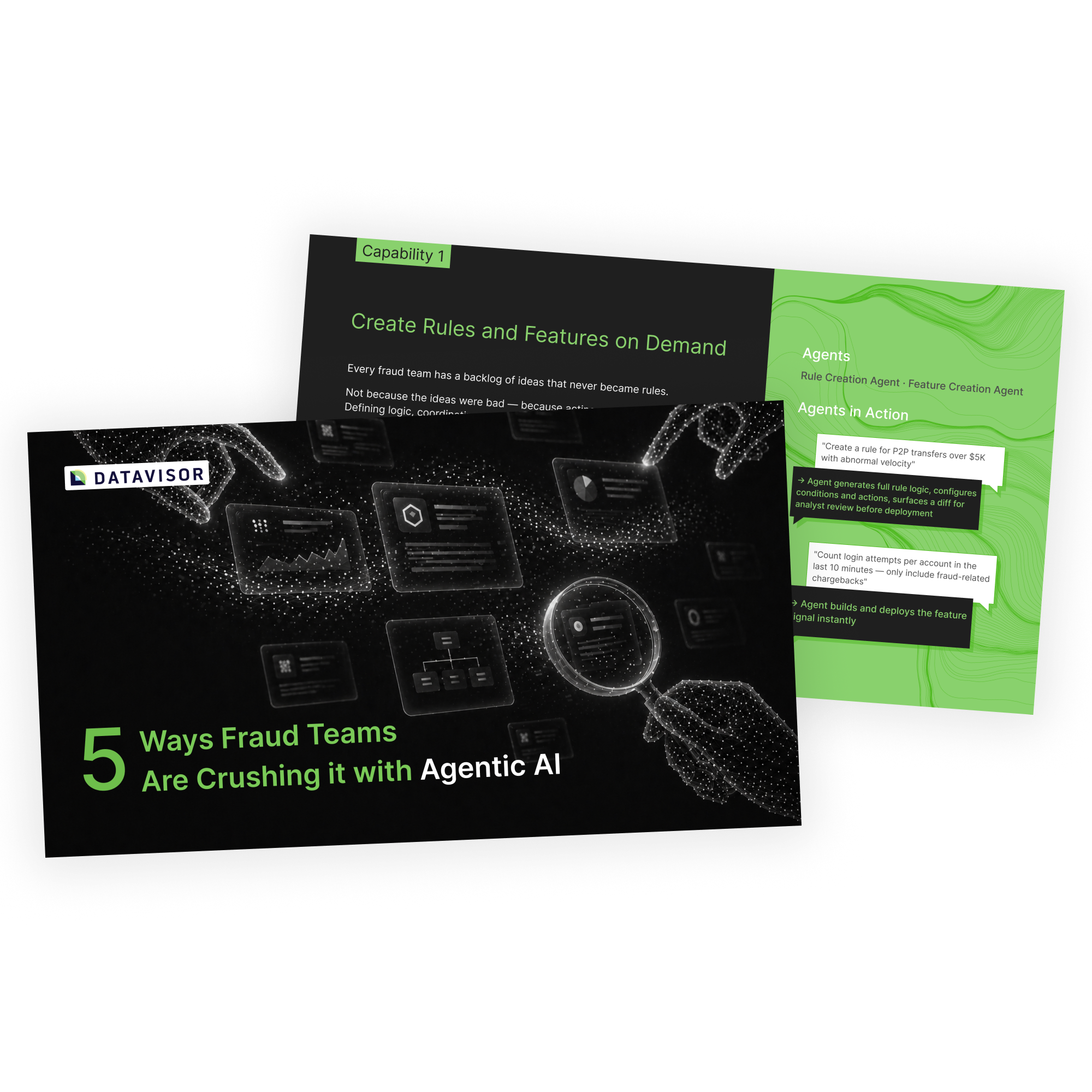
See how AI agents are transforming fraud operations in our companion ebook.
- Build and deploy detection rules from a plain-language description — no engineering handoff required
- Automatically triage alerts so analysts arrive at every case already oriented
- Act on investigation findings immediately, without a handoff to engineering or a deployment queue
Download the ebook to get a clear vision of how you can start using Agentic AI.
Year-After-Year,
the Industry’s Choice



.png)
.png)