What’s inside?
What we discuss in this simple handbook:
- What fraud data scientists do and the terms they use
- How to work cross-functionally on fraud data science
- The tools used by top-performing fraud data scientists
- Bonus! The ultimate ML + fraud data science glossary
What Is the Application of Data Science in Fraud Detection?
Data science is the combination of domain expertise, quantitative methods, and analytical skills used to extract meaningful insights from large quantities of information.
In the world of fraud detection, data science refers to the activities performed to process the data available to financial services, ecommerce, and other firms, making it as useful as possible for detecting and preventing fraud.
The Importance of Data Science for Fraud Detection
You probably already know that machine learning is a game changer for modern fraud-prevention strategies, and we promise that this is not a buzzword. Without the use of artificial intelligence, fraud teams would be outmatched by organized fraudsters that employ expensive and advanced tools to commit digital crimes.
But machine learning algorithms are nothing without sound data science practices behind them. Digital events, including purchases, account openings, and transactions, generate more data each day. Without adequate infrastructure to capture, organize, and use that data in scalable ways, fraud teams can become inundated with “garbage information,” and internal confusion can create chaos.
In the context of machine learning, the term “data engineering” is often used more specifically to refer to the construction and transformation of information records, or datasets, in preparation for use in a machine learning model.
Data engineering is crucial to machine learning. The common computer science principle of “garbage in, garbage out” holds that the quality of the output is determined by the quality of the input. In machine learning, the output is the result produced by the algorithm, while the input is the data supplied to it. If the data is poor, even the most sophisticated algorithm will produce limited results.
Dataset Construction: The First Step for Fraud Detection
Why download?
Data science is one of the fastest growing fields of knowledge in business, and its importance for fraud detection cannot be overlooked by modern experts.
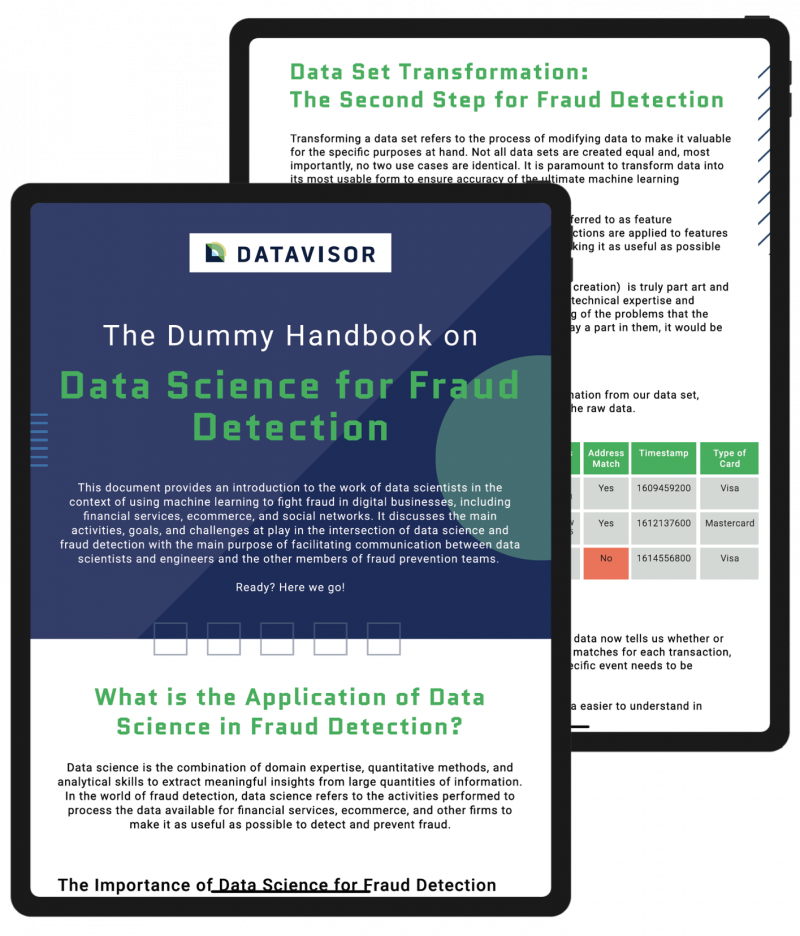
This document provides an introduction to the work of data scientists in the context of using machine learning to fight fraud in digital businesses, including financial services, ecommerce, and social networks. It discusses the main activities, goals, and challenges at play in the intersection of data science and fraud detection with the main purpose of facilitating communication between data scientists and engineers and the other members of fraud prevention teams.
Year-After-Year,
the Industry’s Choice







.png)
.png)