You pull off the robbery. You escape the police. You have a bag full of stolen money.
There's just one problem: You can't necessarily spend it.
In Grand Theft Auto VI (GTA VI), getting your hands on money and making that money usable are two different challenges.
Early gameplay guides describe a system in which players must move certain stolen funds through criminal contacts before they become spendable. It's a surprisingly interesting addition to a franchise famous for heists, fast cars, and spectacularly unrealistic escapes.
And while GTA VI is obviously a work of fiction, the distinction between possessing money and making it appear legitimate is at the heart of one of the world's most persistent financial crimes: money laundering.
With GTA VI launching on November 19, 2026, there's no better time to ask: How much of Vice City's criminal economy reflects the real world? And what can it teach us about detecting financial crime?
1. Money Laundering in GTA VI: Is It Really Part of the Game?
Yes. But the reality is more specific than some of the online speculation suggests.
According to launch-period walkthroughs published by PowerPyx and GAMES.GG, GTA VI includes a money-laundering mechanic involving marked bills obtained through robberies.
Players can bring these proceeds to criminal contacts known as fences, who convert them into usable money. The system is unlocked through story progression, and the game even includes an achievement called "Dime on the Dollar," which rewards players for laundering $250,000 in marked bills through their contacts.
The game's economy also distinguishes between money held in a bank account, physical cash carried by the player, and stolen goods that must be sold to a buyer before their value can be realized. GTA Base's launch guide documents these distinctions.
That introduces an intriguing layer of financial realism.
Stealing $100,000 doesn't automatically mean having $100,000 available to spend.
In the game, the challenge is finding the right contact to convert criminal proceeds into usable funds.
In the real world, the challenge is considerably more complex.
2. From Dirty Money to Clean Money: What GTA VI Gets Right
Money laundering is the process of disguising the criminal origins of funds so they can appear to come from legitimate activities.
The Financial Action Task Force (FATF), the global standard-setting body for combating money laundering, describes three commonly recognized stages:
Placement: Introducing illicit proceeds into the financial system.
Layering: Moving or transforming funds through transactions designed to obscure their origins.
Integration: Reintroducing the proceeds into the legitimate economy with an apparently lawful explanation.
These stages aren't always sequential or neatly separated, but they provide a useful framework.
In GTA VI, taking marked bills to a fence compresses the laundering problem into a relatively straightforward gameplay interaction.
In reality, criminals may use multiple accounts, intermediaries, businesses, assets, and financial institutions to obscure the relationship between illicit activity and its proceeds.
Consider a hypothetical criminal network moving stolen funds through several accounts controlled by different individuals before directing them toward an apparently legitimate business.
Viewed individually, some transactions might resemble ordinary financial activity.
Viewed together, the network could reveal a very different picture.
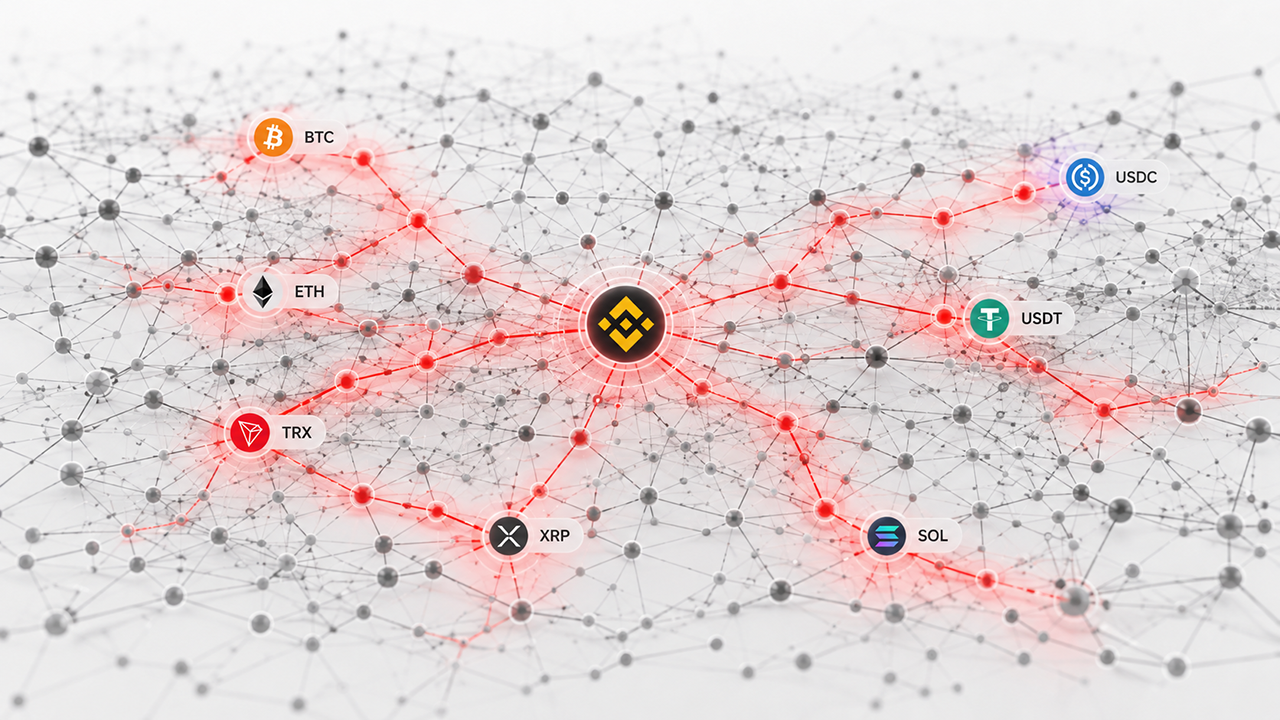
That's the fundamental challenge for anti-money laundering (AML) teams: The suspicious activity may not be obvious in any single transaction. It emerges from the relationships between transactions.
The game simplifies that complexity for entertainment. Financial institutions don't have that luxury.
3. The Business-Front Fantasy: A GTA Mechanic With Real-World Parallels
One of the most recognizable money-laundering concepts is the legitimate business that conceals criminal activity.
And Rockstar has already explored this idea explicitly.
In June 2025, Rockstar released Money Fronts, an update for GTA Online—not GTA VI's single-player campaign.
The update lets players use businesses such as the Hands On Car Wash, Higgins Helitours, and Smoke on the Water as fronts for criminal operations. Players balance legitimate-looking business activity with illicit income while managing the attention their operations attract.
Rockstar's official Money Fronts announcement describes the mechanic directly.
The important distinction: GTA Online's business-front system should not be presented as a confirmed GTA VI business-ownership feature.
Nevertheless, it provides an excellent illustration of a real-world financial crime typology.
Legitimate businesses can be exploited to conceal the movement of criminal proceeds. The risk isn't limited to stereotypical cash-intensive storefronts; complex corporate structures, intermediaries, and high-value assets can also play roles.
For example, in August 2025, the U.S. Treasury's Financial Crimes Enforcement Network (FinCEN) issued an advisory on Chinese money laundering networks. It highlighted the use of money mules, shell companies, and real estate transactions in laundering schemes linked to transnational criminal organizations.
This illustrates a critical difference between fiction and reality.
In GTA, a suspicious business may be part of an obvious criminal storyline.
In the real economy, a business can have genuine customers, employees, revenue, and operations while also being exploited for illicit purposes.
For financial institutions, the question is rarely as simple as whether a business looks legitimate.
It's whether the underlying financial behavior makes sense.
4. Meet the Money Mules: Why Criminal Networks Matter More Than Individual Transactions
In GTA VI, players interact with criminal contacts who help turn stolen goods and marked bills into usable funds.
The concept of an intermediary has a direct real-world parallel: the money mule.
Money mules are individuals who receive or transfer funds on behalf of others, sometimes knowingly participating in criminal activity and sometimes being recruited through deception.
A mule may appear to be an ordinary banking customer.
The suspicious behavior becomes clearer when investigators examine how money moves across multiple accounts.
For example, an account might receive funds from unrelated individuals and rapidly transfer most of those funds onward. Several seemingly unrelated accounts might share counterparties or exhibit coordinated transaction patterns.
These behaviors don't automatically prove money laundering. But they can warrant closer investigation, particularly when combined with other risk indicators.
FinCEN's 2025 advisory on money laundering networks underscores the importance of understanding intermediaries and the movement of illicit proceeds through complex networks.
This creates a significant challenge for traditional transaction-monitoring systems.
A rules-based system might flag a transaction exceeding a particular threshold.
But what happens when a criminal network distributes activity across numerous accounts, keeps individual transactions relatively small, or changes its behavior to avoid established detection rules?
The challenge is not simply identifying a suspicious payment, but identifying the hidden connections that make an entire network suspicious.
This is where graph analytics, behavioral analysis, and unsupervised machine learning become especially valuable.
Rather than evaluating every account or transaction in isolation, financial institutions can analyze relationships between entities, detect unusual behavioral patterns, and investigate coordinated activity that might otherwise remain hidden.
5. GTA VI Has Wanted Levels. Banks Need Something Smarter.
One of the most recognizable features of Grand Theft Auto is its wanted-level system. Commit a crime, attract police attention, and watch the consequences escalate. The mechanic is simple and immediately understandable: the more attention you attract, the harder it becomes to escape. Players always know when they're being pursued because the game makes that information impossible to miss.
Real-world financial crime detection is far less straightforward. There's no flashing warning above a suspicious bank account, and criminals rarely leave obvious clues connecting their transactions to illicit activity. Instead, financial institutions must distinguish legitimate customer behavior from potentially suspicious activity, often across thousands or millions of transactions. A payment that appears routine in isolation may become concerning when viewed alongside other accounts, identities, or transaction patterns.
The scale of the challenge is significant. According to the FBI's 2025 Internet Crime Report, the Internet Crime Complaint Center received more than one million complaints, with reported losses exceeding $20.8 billion, including approximately $8.6 billion attributed to investment-related fraud. While these figures represent reported U.S. internet crime losses rather than total global money laundering, they demonstrate the enormous financial consequences of sophisticated criminal activity.
For banks, fintechs, and payment providers, effective detection means identifying suspicious behavior as early as possible without creating unnecessary friction for legitimate customers. Traditional rules and transaction thresholds remain useful, but they cannot always capture the complexity of evolving criminal networks. Financial institutions increasingly need to connect signals across accounts, transactions, identities, and customer behavior to recognize suspicious patterns that might otherwise go unnoticed.
Unlike GTA's wanted levels, real-world financial crime doesn't announce itself. Detecting it requires understanding the patterns criminals try to hide.
6. From Vice City to Real-Time Fraud Detection: Where AI Changes the Game
In GTA VI, players can learn the rules of the criminal economy and use them to navigate the game.
In the real world, financial criminals are also constantly adapting.
They change tactics, recruit new intermediaries, exploit emerging payment channels, and look for weaknesses in existing detection systems.
That creates a fundamental problem for fraud and AML teams: How do you detect a criminal pattern you've never seen before?
At DataVisor, we believe the answer lies in combining AI-powered detection with a connected view of financial activity.
DataVisor's fraud and AML platform brings together capabilities designed to help financial institutions identify sophisticated financial crime, including:
- Unsupervised machine learning to identify emerging anomalies and previously unseen patterns without relying exclusively on labeled historical fraud examples.
- Cross-entity link analysis to uncover relationships among accounts, customers, transactions, and other entities that may indicate coordinated activity.
- Continuous transaction monitoring to evaluate financial activity and surface suspicious behavior.
- AI agents for adaptive decisioning, investigations and reporting to help analysts examine alerts, manage cases, and support compliance workflows.
The value of these capabilities is more than detecting more anomalies: It's helping financial crime teams distinguish meaningful risk from ordinary customer activity, connect fragmented evidence, and investigate complex networks more efficiently.
Because a transaction that looks harmless on its own may become significant when connected to dozens of other transactions. And a criminal operation that appears invisible at the account level may become much clearer at the network level.
The Final Lesson: In GTA VI, Crime Is Entertainment. In the Real World, Detection Is Everything.
Grand Theft Auto VI turns financial crime into a gameplay challenge. Players steal money, navigate criminal networks, and find ways to make illicit proceeds usable.
The mechanics are simplified, the consequences are fictional, and the experience is designed to be entertaining. But the underlying concepts aren't entirely imaginary.
Money laundering really does involve concealing the origins of illicit funds. Criminal networks really do depend on intermediaries. Legitimate businesses and financial accounts really can be exploited to move criminal proceeds.
And perhaps the most important parallel is this:
The individual transaction is only part of the story. The network behind it is what matters.
As fraud and financial crime grow more sophisticated, financial institutions need the ability to see beyond isolated events, identify emerging patterns, and respond before criminal activity spreads.
In Vice City, players can outrun a wanted level. In the real world, stopping financial crime requires something far more powerful: intelligence that can connect the dots.
Ready to uncover the financial crime patterns traditional systems miss?
Explore DataVisor's AI-powered fraud and AML platform and discover how advanced machine learning, link analysis, and intelligent investigations can help your organization stay ahead of evolving threats.